This may sound technical for some readers, but what we are trying to convey in this article is about storage chips, the technologies used in designing them, and how fast they can read/copy files. Mostly, we have eMMC and UFS storage. eMMC, which is an acronym for the embedded multimedia card, was the main guy until UFS appeared to be much better and faster. UFS means Universal Flash Storage, and it is usable for mobile phones, digital cameras, and other devices that have storage capacities. The technology boasts to utilize the same amount of power used by eMMC while providing better performance. Some techies say that UFS is a portable SSD for smartphones. In the below article, we are going to compare UFS 2.1 versions and 3.0 versions.
With UFS leading over eMMC, we shouldn’t be talking about eMMC anymore but UFS. The UFS 3.0 is the latest category/version, it supersedes the 2.1, and here in this article, we will discuss their speed differences.
UFS 3.0 and UFS 2.1
You should know that UFS 3.0 is faster than 2.1. It is designed with more advanced technologies. UFS 3.0 offers 2100 Mbps, and 410 Mbps read/write speeds, while UFS 2.1 offers 850/250 Mbps for reading and writing. The just shared info shows that the UFS 3.0 has sizeable gains in performance from UFS 2.1.
However, coming down to smartphones, you can’t tell the performance difference between a device running with UFS 2.1 storage and another running with UFS3.0 storage. Currently, most premium android devices run with UFS 2.1, it is still superb storage for mobile devices, the speed is fantastic; it is just suitable for mobile devices.
Any device running with UFS 2.1 will offer better read/copy performance than another running on any eMMC storage version.
How UFS 2.1 works?
eMMC works in a parallel way. Either you can read or write. That’s why it is slower compared with Mobile Internal Storage. But UFS 2.1 works in a different way. Read and write can be done in both directions. I attached the image to explain this easily. It is faster than eMMC and SD Card storage.
We’re now in 2019, and a lot of technologies implemented on smartphones have advanced; hence, it time to move on with UFS 3.0 in place of 2.1. Now there 7nm chipsets that are very fast and work with high-speed processing cores. Plus, there are now fantastic graphics and dedicated AI, AR engines. With all these new technologies, your mobile device storage will have a lot to do, if not initially, but definitely in the long run.
Most of the manufacturers are going to use this UFS 3.0 in the upcoming flagship devices. Other than Samsung mobiles, OnePlus 7 devices are using this technology. Furthermore, the UFS 3.0 integrates support for the cutting-edge high-density NAND memories alongside other exciting supports. If you need further information on this, I covered it as a particular topic- Samsung eUFS 3.0 storage solution.
The actual differents
Ideally, 3.0 offers about 2X increase in speed, utilizing twice the bandwidth of the UFS 2.1 standard. This speed will push transfer speed up to 11.6 Gbps per lane, and since there are dual channels, a hyper-speed of 23.2 Gbps is achievable. Also, UFS 3.0 is designed to utilize less power and make flash storage consistent at higher temperatures. With UFS 3.0, one can record 4k or even 8k videos with mobile phones without any hassles. Devices with UFS 3.0 are faster in reading/writing large chunks of data to/from the storage.
The below comparison can give you further details about the specs. The 3.0 version is way better storage, and It can boost your mobile speed in realtime.
If your product key isn't embedded in the firmware or you're missing your COA sticker, you're not out of luck as long as you haven't formatted your computer. You can still recover the key because Windows stores it in the registry. Here is how:
1. Open a new Notepad window
2. Copy and paste the following text into the window
Set WshShell = CreateObject("WScript.Shell")
MsgBox ConvertToKey(WshShell.RegRead("HKLM\SOFTWARE\Microsoft\Windows NT\CurrentVersion\DigitalProductId"))

Function ConvertToKey(Key)
Const KeyOffset = 52
i = 28
Chars = "BCDFGHJKMPQRTVWXY2346789"
Do
Cur = 0
x = 14
Do
Cur = Cur * 256
Cur = Key(x + KeyOffset) + Cur
Key(x + KeyOffset) = (Cur \ 24) And 255
Cur = Cur Mod 24
x = x -1
Loop While x >= 0
i = i -1
KeyOutput = Mid(Chars, Cur + 1, 1) & KeyOutput
If (((29 - i) Mod 6) = 0) And (i <> -1) Then
i = i -1
KeyOutput = "-" & KeyOutput
End If
Loop While i >= 0
ConvertToKey = KeyOutput
End Function
3. Click File > Save As and save the file to your desktop as productkey.vbs. It's important to include the .vbs extension because this is a Windows Scripting Host file.
4. Close Notepad and double-click the file. Wait a few seconds, and then you will be presented with a popup displaying your product key:
<div class="infoBox" style="background: rgb(255, 255, 255); opacity: 1; width: 314px; border: 3px solid rgb(47, 47, 47); padding: 0px; position: absolute; visibility: visible; left: -121.946px; top: -82.0625px;"><img src="img/petrolstation/close.gif" align="right" style=" position: relative; cursor: pointer; margin: 5px 5px 0 0;"><div class="info-window"><div class="info-inner"><div class="info-title">SETI ROHAYAH KASMANI ENTERPRISE</div><div class="info-address">NO.15, JALAN GELANG EMAS 1, TAMAN GELANG EMAS, 81550 GELANG PATAH, JOHOR</div><div class="info-tel"><b>Please Call:</b><br><b>Tel: </b><span class="gas-tel">-</span><br><b>Mobile No: </b><span class="gas-mobile"><a href="tel://016-757 6549">016-757 6549</a></span></div></div><div class="info-direction"><a onclick="window.location.href=this.href;return false;" class="link-btn lb-regular lb-direction-btn" href="javascript:GetDirection(1692,'68, Jalan Laman Setia 3/10', 'NO.15, JALAN GELANG EMAS 1, TAMAN GELANG EMAS, 81550 GELANG PATAH, JOHOR, 81550 GELANG PATAH (1.451778, 103.585300)', '1.451778, 103.585300');">Get Directions</a></div><div class="info-disclaimer"><b>Note:</b><br>Delivery arrangement shall be made directly with our dealers based on mutually agreed delivery time and charges.</div></div></div>
Into:
<div class="infoBox" style="background: rgb(255, 255, 255); opacity: 1; width: 314px; border: 3px solid rgb(47, 47, 47); padding: 0px; position: absolute; visibility: visible; left: -121.946px; top: -82.0625px;">
<img src="img/petrolstation/close.gif" align="right" style=" position: relative; cursor: pointer; margin: 5px 5px 0 0;">
<div class="info-window">
<div class="info-inner">
<div class="info-title">SETI ROHAYAH KASMANI ENTERPRISE</div>
<div class="info-address">NO.15, JALAN GELANG EMAS 1, TAMAN GELANG EMAS, 81550 GELANG PATAH, JOHOR</div>
<div class="info-tel">
<b>Please Call:</b>
<br>
<b>Tel: </b>
<span class="gas-tel">-</span>
<br>
<b>Mobile No: </b>
<span class="gas-mobile">
<a href="tel://016-757 6549">016-757 6549</a></span></div></div>
<div class="info-direction">
<a onclick="window.location.href=this.href;return false;" class="link-btn lb-regular lb-direction-btn" href="javascript:GetDirection(1692,'68, Jalan Laman Setia 3/10', 'NO.15, JALAN GELANG EMAS 1, TAMAN GELANG EMAS, 81550 GELANG PATAH, JOHOR, 81550 GELANG PATAH (1.451778, 103.585300)', '1.451778, 103.585300');">Get Directions</a></div>
<div class="info-disclaimer">
<b>Note:</b>
<br>Delivery arrangement shall be made directly with our dealers based on mutually agreed delivery time and charges.</div></div></div>
DxOMark: The Xiaomi Mi CC9 Pro Premium Edition is the best camera phone in the world
The Mi CC9 Pro was launched today and the launch event saw a huge focus on the phone's penta-camera setup. The new device has now made its way to DxOMark and impressed, but DxOMark scores are never to be taken as gospel at the end of the day.
The Nokia 9 PureView with its penta-lens camera setup was highly-anticipated but ultimately disappointed. Xiaomi has now launched its own penta-camera phone, the Mi CC9 Pro, and it looks to be everything the Nokia 9 should have been.
It's important to note that the phone tested by DxOMark is not the regular Mi CC9 Pro, but the Mi CC9 Pro Premium Edition. The Premium Edition differs from the base CC9 Pro by virtue of its f/1.87 8P lens. It costs US$500.
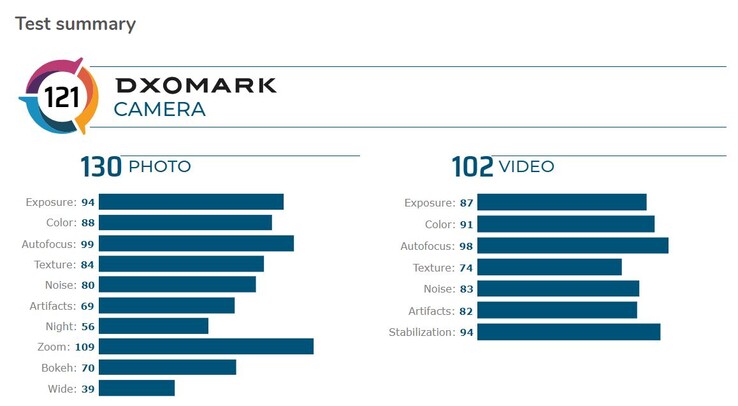
Going by DxOMark's review, the Mi CC9 Pro Premium is the joint best camera smartphone in the world, earning an overall score if 121 that sees it sit alongside the Huawei Mate 30 Pro at the top of the chart.
In the still photography department, it records a score of 130. That's the second-best DxOMark has ever awarded, with the Mate 30 Pro being slightly higher at 132. Other devices at the very top of the leaderboard include the Samsung Galaxy Note 10+ (126), Huawei P30 Pro (125) and the Google Pixel 4 (117).
In the video category, the Mi CC9 Pro tops the charts, making it the best smartphone for video. Going by DxOMark's scoring criteria, of course. It comes off with a score of 102, above the Google Pixel 4 (101), Galaxy Note 10+ (98), and Huawei Mate 30 Pro (100). Just like the Mi 9, however, the Mi CC9 Pro, as tested by DxOMark, shoots at a default resolution of 4K, and that may be a factor here.
The Mi CC9 Pro is capable of 5x optical zoom, which puts it in a special class that has, until now, been exclusive to the Huawei P30 Pro and OPPO Reno 10x Zoom. It handily outdoes the P30 Pro in that aspect, too, earning a zoom score of 109. The P30 Pro, the second-best, makes do with a score of 95. It's also the second-best wide-angle shooter (39), just below the Galaxy Note 10+ (40).
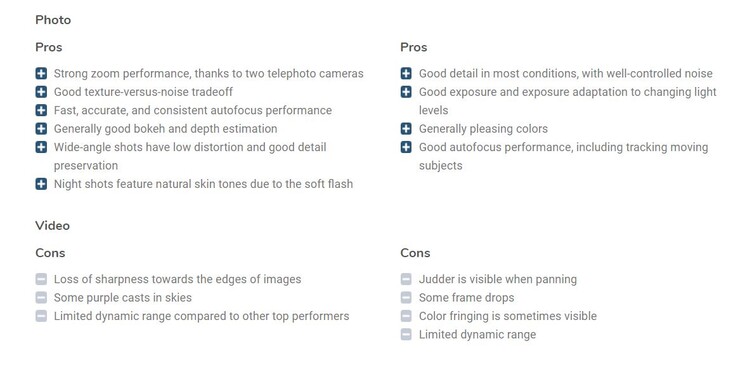
While the Mi CC9 Pro Premium Edition's scores are impressive, taking a hard look at the samples DxOMark provided is a better way of evaluating...and things aren't quite as straightforward as the overall scores may imply. In most shots, the Mi CC9 Pro tended to overexpose the foreground, especially in high-contrast scenes. Surprisingly, too, it lagged behind the Galaxy Note 10+ 5G and Huawei Mate 30 Pro in terms of dynamic range.
Colors were also less pleasing than the Note 10+ 5G, and night-time shots were a bit worse. Xiaomi's software still lags behind the competition. It will be interesting to see how the phone performs with a Google Camera port, however.
Batteries can be sorted into 3 categories: lithium-ion battery, alkaline battery and nickel–metal hydride battery.
Lithium-ion batteries
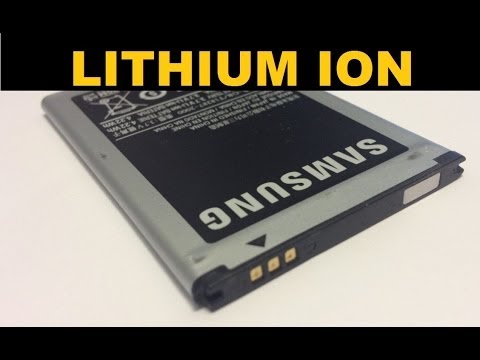
Lithium-ion batteries are common in consumer electronics. They are one of the most popular types of rechargeable battery for portable electronics, with one of the best energy densities, no memory effect, and only a slow loss of charge when not in use. Beyond consumer electronics, LIBs are also growing in popularity for military, electric vehicle, and aerospace applications. Research is yielding a stream of improvements to traditional LIB technology, focusing on energy density, durability, cost, and intrinsic safety.
Alkaline batteries
Alkaline batteries are a type of primary batteries dependent upon the reaction between zinc and manganese dioxide(Zn/MnO2). A rechargeable alkaline battery allows reuse of specially designed cells. The alkaline battery gets its name because it has an alkaline electrolyte of potassium hydroxide, instead of the acidic ammonium chloride or zinc chloride electrolyte of the zinc-carbon batteries. Other battery systems also use alkaline electrolytes, but they use different active materials for the electrodes.
Nickel–metal hydride batteries
A nickel–metal hydride cell, abbreviated NiMH or Ni-MH, is a type of rechargeable battery. It is very similar to the nickel–cadmium cell (Ni-Cd). NiMH use positive electrodes of nickel oxyhydroxide (Ni-OOH), like the Ni-Cd, but the negative electrode uses a hydrogen-absorbing alloy instead of cadmium. A NiMH battery can have two to three times the capacity of an equivalent size Ni-Cd, and their energy density approaches that of a lithium-ion cell.
NiMH batteries have replaced Ni-Cd for many roles, notably small rechargeable batteries. NiMH batteries are very common for AA (penlight-size) batteries, which have nominal charge capacities (C) ranging from 1100 mAh to 3100 mAh at 1.2 V, measured at the rate that discharges the cell in five hours.
About 22% of portable rechargeable batteries sold in Japan in 2010 were Ni-MH. In Switzerland in 2009, the equivalent statistic was approximately 60%. This percentage has fallen over time due to the increase in manufacture of Li-ion batteries.
One significant disadvantage of NiMH batteries is a high rate of self-discharge; a Ni-HM battery will lose as much as 3% of its charge per week of storage. In 2005 a low self-discharge NiMH battery (LSD) was developed. LSD Ni-MH batteries significantly lower self-discharge, but at the cost of lowering capacity by about 20%.
Types of batteries
Notes about battery
All rechargeable battery’s voltage are 3.7V-4.2V. If batteries are series-connected, the total voltage should be added up. If batteries are paralleled-connected, the total voltage remains 3.7V-4.2V. (Note: TM11 employs 4 18650 batteries and its total voltage is 4.2V. If employs 8 CR123 batteries, the total voltage will be 6 V. (Due to design limitations, TM11 can’t use RCR123 battery.)
All non-rechargeable batteries’ voltage are 3V.
Alkaline batteries’ voltage are1.5V,Ni-MH batteries’ are 1.2V.
Flashlight‘s brightness is subject to battery voltage.
Battery Type conversion: AA = 14500,CR123A = 16340,CR123A*2 = 18650 (Note: Our lights do not support 14500 Li-ion battery types)
Battery safety
LITHIUM BATTERY WARNINGS:
DO NOT puncture, cut, crush, short circuit, recharge, expose to water, fire, or high temperature–fire or explosion may result
DO NOT place loose batteries in a pocket, purse, or other receptacle containing metal objects
DO NOT mix with used or other battery types
DO NOT store with hazardous or combustible materials
DO NOT use water to put out a burning lithium battery — use a class “D” fire extinguisher or other smothering agent
DO NOT mix disposable and rechargeable batteries in your illumination tool
DO NOT put batteries into a device backwards
DO NOT allow children access to lithium batteries
DO store lithium batteries in a cool, dry, ventilated area
Follow applicable laws and regulations for transport, shipping, and disposal. For more details on recycling lithium batteries please contact a government recycling agency, your waste disposal service, the retailer where the batteries were purchased, or visit reputable online recycling sources, such as http://www.batteryrecycling.com/. Failure to follow these directions could result in damage to your illumination tool that may not be covered by Nitecore’s warranty.
CAMERA or “PHOTO” BATTERY WARNING
DO NOT use any batteries advertised or promoted specifically for use in cameras, for photography, or for other low-drain purposes. Use only batteries labeled as safe to use in high-performance, high-drain devices, and which contain built-in fault and heat protection for added safety. The use of photographic-type batteries can constitute a safety hazard, including risk of fire or explosion, and may void your warranty.
COUNTERFEIT AND INFERIOR-QUALITY BATTERY WARNING
There have been many reported incidents in which counterfeit and /or inferior-quality lithium batteries developed internal shorts that have led to fire and/or explosion. This has resulted in damage to the illumination tool, and in some cases, property damage or personal injury. Customers are specifically cautioned from purchasing batteries from online auction websites, as these are known sources of counterfeit or inferior-quality batteries.
Nitecore performance claims are based on the use of Nitecore 123A lithium batteries only. Nitecore 123A lithium batteries are manufactured to strict quality standards specifically for use in high-performance, high-drain devices, and contain built-in fault and heat protection for added safety. The use of counterfeit or inferior-quality batteries could greatly reduce runtime and output performance, damage your illumination tool, constitute a safety hazard, and may void your warranty.
Li-ion vs Alkaline batteries
Li-ion batteries are preferred over alkaline AA batteries because of several reasons:
Higher Power Density
For a given size (battery volume), It would take two alkaline batteries to match the power output of a single 123A lithium battery.
Less Weight
For a given size (battery volume), Lithium batteries weigh about half as much as alkalines but produce more power.
More Voltage
123A batteries generate 3 volts. Alkalines, just 1.5 volts.
Better Voltage Maintenance
A lithium battery maintains fairly constant voltage for up to 95% of its life, depending on discharge rate. At moderate to high discharge rates, the voltage of alkaline batteries drops rapidly, making them unsuitable for use in high-output flashlights.
Longer Shelf-Life
Lithium batteries can retain up to 90% of their original power output capability after 10 years of storage, making them perfect for emergency preparedness use. Stored alkalines deplete themselves much more rapidly.
Wide Temperature Tolerance
Lithium batteries greatly outperform alkalines over a wide temperature range, providing a working output from -76º to 176º F (-60º to 80º C).
We're all looking for batteries that can do the job.
Whether we're talking power tools or just little things around the house, we like when a battery has the power needed and lasts a long time.
Today we're going to highlight the pros and cons of both the lithium ion battery and NiMH batteries, so you can make an informed decision.
Lithium Ion Batteries - Quick Summary
Hold charge for long time
Stay charged in storage
More voltage per cell
Always rechargeable
Not available in all sizes
Different chargers for different batteries
Benefits of lithium ion batteries
Lithium ion batteries are basically rechargeable batteries. However unlike their previous models that used lithium in its pure metallic state, lithium ion is made of various compounds.
They've become more widely used in power tools, smart phones, and even electric cars because of their ability to recharge and hold a charge. To learn more, check out this short video:
One major benefit that is clear when you use lithium ion batteries in various power tools is that they offer more energy density than most rechargeable batteries in the market.
These batteries also operate at a higher voltage of around 3.7 volts.
This fact makes it possible for one to use a single cell to produce much more voltage than a NiMH battery. The complex design that is used in the manufacturing process of the lithium ion battery ensures that there is inclusion of a special circuitry system which protects the battery from overcharging.
This design also allows the battery to hold on its charge for a long period of time, even when in storage.
Cons of lithium ion batteries
Unfortunately this batteries are not available in their standard sizes that are used in some tools like AA,C and D. They also require specific, sophisticated chargers in order to charge them. The use of the wrong charger can lead to leaks and other ugly problems.
NiMH Batteries - Quick Summary
Available in many sizes
Low voltage operation
Cheap to replace
Runs at full strength for life of the charge
Loses charge in storage
Voltage depletion over time
Benefits of NiMH batteries
Ideally NiMH batteries operate like any other alkaline battery, with a few adjustments to it to make it more efficient.
They do operate at a lower voltage in comparison to lithium ion batteries at 1.2 volts. This translates to the need of using several cells to give off the same amount of voltage, compared to a lithium ion counterpart.
NiMH batteries are known for their ability to power devices for a longer period of time compared to most other batteries. Their voltage power also does not falter like most rechargeable batteries and stays at a constant voltage regardless of the remaining charge level.
So you can expect full power while the charge lasts - which is a big deal.
NiMH batteries are not that sophisticated, which means that they are available in standard sizes like AA, C and D and hence available for use in everyday products as well as power tools.
They are also generally cheaper to buy and replace, which is a bonus.
Cons of the NiMH batteries
Unfortunately NiMH batteries are known to lose 1 to 5% of charge a day when in storage.
This fact means that you'll need to charge right before you use it, which isn't always convenient in a more "sudden" situation. Many people also believe that the NiMH batteries suffer from 'memory effect' which technically is incorrect.
The batteries however do suffer from voltage depletion and voltage depression - a fact that is often confused as having a memory effect, which is caused by recharging batteries that haven't been fully discharged, causing them to develop lower voltage power.
With a correct charging and storing system, this really shouldn't be a concern for you.
Lithium ion vs. NiMH batteries - Which is better?
So we are back to the original question.
Between the two which type of battery is better to use? Well the answer largely depends on what power tool you are using it for. Even though lithium ion batteries have some obvious advantages, they may not be available in the size you need (obvious deal-breaker) and they tend to be more expensive.
NiMH batteries on the other hand require more maintenance/replacement but also work well for most jobs. They are also relatively cheaper to buy, which is a big plus for NiMH
NiCad (Nickel-Cadmium) and NiMH (Nickel-Metal Hydride) are two very different types of batteries. Both types must be handled differently from one another in regards to charging and discharging procedures and philosophies.
In general, NiMH batteries cannot handle the high rate of charges or discharges (typically over 1.5-2 amps) that NiCad batteries can. Many modelers use high rate, peak detection or time-based chargers to charge NiCad batteries. Such chargers are NOT recommended for NiMH batteries (unless otherwise specified in the charger or battery literature) as they can cause permanent damage to the NiMH cells. Also, NiMH batteries will not perform well in high rate discharge applications, typically providing only a small fraction of the rated capacity in these instances.
NiMH batteries also have approximately twice the self-discharge rate of NiCad batteries when in an used state. For example, when your radio is off, a 1650mah NiMH battery can discharge itself nearly twice as quickly as a NiCad battery, typically within one week. Therefore, you must charge your NiMH batteries the night before each use.
When handled correctly though, NiMH batteries can be very beneficial, providing much longer run times than comparably sized and weighted NiCad batteries.
We highly recommend NiMH batteries in applications that call for long duration but not a high amp load. If you have an aircraft with very large servos that pull a lot of amps or more than 8 standard servos we recommend using NiCad batteries for the best results.
Choosing the correct battery for your application is critical. When making this decision you may need to ask yourself the following questions:
The sheer popularity of these rechargeable batteries often raises the question, “What’s the difference between NiCAD and NiMH batteries?”
To summarize, the main differences between NiCAD and NiMH batteries deal with capacity, memory effect, and environmental friendliness.
Nickel-metal hydride (NIMH) batteries have a higher capacity than nickel-cadmium (NICAD) batteries, which means that they can generally power your device for longer. They also don’t suffer from the same memory effect, so they won’t “forget” the ability to achieve a full charge over time. Finally, NiMH batteries are much better for the environment than their NiCAD battery counterparts.
However, nickel-cadmium still offers some advantages over nickel-metal hydride, such as their extreme temperature performance.
Our team at Battery Depot wrote this article to help explain the difference between NiCAD and NiMH batteries, and to help you decide which battery is the right one for your needs. Don’t hesitate to reach out to us when you’re finished reading if you have any questions.
Nickel-Cadmium (NiCAD) Batteries
The world’s first NiCad battery was developed by a Swedish scientist in 1899. Needless to say, there have been many improvements since then.
A standard nickel-cadmium battery is composed of a nickel(III) oxide-hydroxide positive electrode plate, a cadmium negative electrode plate, a separator, and a potassium hydroxide electrolyte.
Common uses: Some popular applications of NiCAD batteries are toys, emergency lighting, medical equipment, commercial and industrial products, electric razors, two-way radios, power tools, and more.
Benefits: Here’s an overview of some of the advantages of NiCAD batteries:
Relatively inexpensive
Charge very quickly, simple to charge
Easy to store, easy to ship
Take a high number of charges
Functional in low temperatures
Drawbacks: And here are some of their shortcomings:
Not as powerful as some other rechargeable batteries
Self-discharge while in storage
Contain toxic metals that are harmful to the environment
Nickel-Metal Hydride (NiMH) Batteries
NiMH batteries are a much more modern phenomenon. Research and development began at the Battelle-Geneva Research Center in 1967, and was satisfactorily completed in 1987.
The chemical composition of a standard nickel-metal hydride battery looks like this: a nickel hydroxide positive electrode plate, a hydrogen ion negative electrode plate, a separator, and an alkaline electrolyte such as potassium hydroxide.
Common uses: These include automotive batteries, medical instruments, pagers, cell phones, camcorders, digital cameras, electric toothbrushes, and other low-cost consumer devices.
Benefits: Here’s a look at a few of the advantages of going with a NIMH battery:
Quite a high capacity compared to other rechargeable batteries
Resists both over-charging and over-discharging
Extremely lightweight construction
Friendly to the environment: no hazardous chemicals like cadmium, mercury, or lead
Drawbacks: And here are some of the limitations:
More expensive than other rechargeable models
Self-discharge rapidly while in storage
Cut power suddenly rather than a slow trickle down
Some only work with manufacturer’s charger
Learn More About Difference Between NiCad and NiMH
If you have any questions about the nature or difference between NiCad and NiMH nickel-cadmium or nickel-metal hydride batteries, our team can help.
We’ve been working in the field for over 20 years, and we have plenty of experience answering questions about both nickel-cadmium and nickel-metal hydride batteries.
We look forward to hearing from you. Contact us at Battery Depot today to get in touch with an expert.
WHICH POWER BANK IS GOOD, LITHIUM ION OR LITHIUM POLYMER?
Both are similar and good for different reasons but ultimately, cost and functionality appear to be the key determinants of preference.
Difference between Li-ion vs Li-Po
Lithium ion (Li-ion) - Gives high energy density, low discharge rate, no special preparation or charging required before first use and overall cost is comparatively cheap. However, they suffer from aging even when not used. You may have heard of battery life cycles, 500 cycles, etc. The battery packs tend to have an internal control circuit that regulates current to prevent overheating or explosion. The result is you get long life battery packs.
Li-ion batteries are normally encased in hard packs and also don’t like cold temperatures. To ensure best performance, use/charge in fairly warm room temperature. They are easy to modify and the high energy density attracts lots of investments for innovation, safety advancements, versatility of usage like in electric cars, etc.
Health & Safety issue
High risk of explosion if charged too quickly or inappropriately. You may remember Samsung Galaxy Note 7 explosions and product recall in 2016. The smartphone was packed with 3,500mAh lithium-ion battery.
Samsung's President DJ Koh, said in a conference in Seoul, South Korea that the problem was caused by negative electrode components which deflated and caused short circuit that resulted in overheating and explosions.
As a result of these problems, testing standards are very stringent.
Lithium-Polymer (LiPo)
This may appear to be a marketing gimmick but the primary difference is that rather than liquid lithium electrolyte, it uses solid but flexible polymer electrolyte. This means that thin and lightweight designs can hold slightly higher specific energy hence good battery life and, with lower energy density, it is comparatively much safer that Li-ion. But the lower energy density also means it is more expensive to produce.
This means that this type of battery pack may look sleek but you won’t get as much power from it compared to a li-ion battery pack. If battery cells are faulty the battery pack can also suffer from high temperatures, overheat and expand as seen in Apple iPhone 3GS. These may smoke but not explode given the low energy density of this type of battery.
The Implication
To cut costs and make their products more affordable, a significant number of manufacturers mostly go for lithium–ion. Many gadgets like power banks, smartphones, laptops, tablets, ebook readers, MP3/4 players, cordless devices, etc. are made with lithium-ion battery cells which normally have a voltage rating of 3.7v. Some gadgets do come with Li-po battery packs backs which give the added benefit of being able to increase voltage by adding more cells to a flexible plastic container battery pack. When you add a circuit breaker or internal circuit control unit to monitor performance temperature, input/output power, charge level, etc, (to ensure they don’t explode) you technically have a power bank.
Health & Safety concerns
All battery types are susceptible to different levels of risk of fire/explosion due to the inherent nature of electric current. With this in mind, HetoGrow’s solar power banks are built with double overcharge and discharge protection. This is very important for regions with voltage volatility. For more info about this risk see - Can a Power bank explode itself, without any triggering factor?
Lithium-Ion Batteries began their development in 1912. However, they did not become popular until they were adopted by Sony in 1991. Lithium Ion Batteries have high energy-densities and cost less than lithium-polymer batteries. In addition, they do not require priming when first used and have a low self-discharge. However, lithium-ion batteries do suffer from aging – even when not in use.
Type Secondary
Chemical Reaction Varies, depending on electrolyte.
Operating Temperature 4º F to 140º F ( -20º C to 60º C)
Recommended for Cellular telephones, mobile computing devices.
Initial Voltage 3.6 & 7.2
Capacity Varies (generally up to twice the capacity of a Ni-Cd cellular battery)
Discharge Rate Flat
Recharge Life 300 – 400 cycles for 100%
Charging Temperature 32º F to 140º F (0º C to 60º C)
Storage Life Loses less than 0.1% per month.
Storage Temperature -4º F to 140º F ( -20º C to 60º C)
Disposal
Can be recycled by dropping them off at any of our over 7,200 stores nationwide.
Typically designed to be recharged in the device rather than in an external charger.
The chemical construction of this battery limits it to a rectangular shape.
Lighter than nickel-based secondary batteries with (Ni-Cd and NiMH).
Lithium-Polymer Battery
Lithium-polymer batteries can be dated back to the 1970’s. Their first design included a dry solid polymer electrolyte that resembled a plastic film. Therefore, this type of battery can result in credit card thin designs while still holding relatively good battery life. In addition, lithium-polymer batteries are very lightweight and have improved safety. However, these batteries will cost more to manufacture and have a worse energy density than lithium-ion batteries.
Type Secondary
Chemical Reaction Varies, depending on electrolyte.
Operating Temperature Improved performance at low and high temperatures.
Recommended for Cellular telephones, mobile computing devices.
Initial Voltage 3.6 & 7.2
Capacity Varies depending on the battery; superior to standard lithium-ion.
Discharge Rate Flat
Recharge Life 300 – 400 cycles
Charging Temperature 32º F to 140º F (0º C to 60º C)
Storage Life Loses less than 0.1% per month.
Storage Temperature -4º F to 140º F ( -20º C to 60º C)
Disposal
Can be recycled by dropping them off at any of our over 7,200 stores nationwide.
Other Notes
Typically designed to be recharged in the device rather than in an external charger.
Lighter than nickel-based secondary batteries with (Ni-Cd and NiMH).
Can be made in a variety of shapes.
Wrap-Up and Winner
After reading all of the pro’s, con’s, and specifications of both battery types, you can see that there isn’t much of a competition here. Although the lithium-polymer battery is sleeker and thinner, lithium-ion batteries have a higher energy density and cost less to manufacture. Therefore, we obviously know which one is chosen by companies like Samsung, Apple, Motorola, and more. Finally, with new chemicals and such being added to these batteries often, who knows which will come out on top in the long run. The only thing we do know is that this phone, will be sporting a very thin and transparent lithium-ion battery.
44.6K views
View Upvoters
Rearranced by Billson on 20201225_pm043543:
Lithium-Ion Battery
Lithium-Polymer Battery
Lithium-Ion Batteries began their development in 1912. However, they
did not become popular until they were adopted by Sony in 1991. Lithium Ion
Batteries have high energy-densities and cost less than lithium-polymer
batteries. In addition, they do not require priming when first used and have
a low self-discharge. However, lithium-ion batteries do suffer from aging –
even when not in use.
Lithium-polymer batteries can be dated back to the 1970’s. Their
first design included a dry solid polymer electrolyte that resembled a
plastic film. Therefore, this type of battery can result in credit card thin
designs while still holding relatively good battery life. In addition,
lithium-polymer batteries are very lightweight and have improved safety.
However, these batteries will cost more to manufacture and have a worse
energy density than lithium-ion batteries.
Type Secondary
Type Secondary
Chemical Reaction Varies, depending on electrolyte.
Chemical Reaction Varies, depending on electrolyte.
Operating Temperature 4º F to 140º F ( -20º C to 60º C)
Operating Temperature Improved performance at low and high
temperatures.
Recommended for Cellular telephones, mobile computing devices.
Recommended for Cellular telephones, mobile computing devices.
Initial Voltage 3.6 & 7.2
Initial Voltage 3.6 & 7.2
Capacity Varies (generally up to twice the capacity of a Ni-Cd
cellular battery)
Capacity Varies depending on the battery; superior to standard lithium-ion.
Discharge Rate Flat
Discharge Rate Flat
Recharge Life 300 – 400 cycles for 100%
Recharge Life 300 – 400 cycles
Charging Temperature 32º F to 140º F (0º C to 60º C)
Charging Temperature 32º F to 140º F (0º C to 60º C)
Storage Life Loses less than 0.1% per month.
Storage Life Loses less than 0.1% per month.
Storage Temperature -4º F to 140º F ( -20º C to 60º C)
Storage Temperature -4º F to 140º F ( -20º C to 60º C)
Disposal
Disposal
Can be recycled by dropping them off at any of our over 7,200 stores
nationwide.
Can be recycled by dropping them off at any of our over 7,200 stores
nationwide.
Other Notes
Typically designed to be recharged in the device rather than in an
external charger.
Typically designed to be recharged in the device rather than in an
external charger.
The chemical construction of this battery limits it to a rectangular
shape.
Lighter than nickel-based secondary batteries with (Ni-Cd and NiMH).
Lighter than nickel-based secondary batteries with (Ni-Cd and NiMH).
What’s the Better Battery for Your Portables—Li Ion or Li Poly?
Designers opting for a lithium chemistry can choose from traditional cylindrical/prismatic Li-ion or the Li-poly pouch. Many factors, from thermal stability to lifetime, come into play in the decision.
Rechargeable lithium batteries come in a variety of configurations, physical sizes, and capacity ratings. There are three basic configurations within the industry for lithium chemistry. The first are round configurations similar to small barrels, known as cylindrical cells/batteries. Typical sizes are 18 × 65 mm, 21 × 50 mm, and 26 × 65 mm. The next common configurations are flat and rectangular, similar to small boxes, known as prismatic cells. Typical sizes are 5 × 34 × 50 mm and 10 × 34 × 50 mm, along with a variety other standard sizes.
The third configuration is flat foil pouches very similar to chewing-gum packages, generally known as lithium-polymer cells/batteries. Typical sizes are per prismatic cells, but a wide variety of additional sizes abound within the marketplace.
Industry verbiage typically refers to cylindrical and prismatic cells as being “traditional” Li ion and pouch cells as being “Li polymer” or “Li poly” or “pouch” batteries. For the purposes of this article, we will use Li ion for traditional cells and Li poly for pouch nomenclature.
The Manufacturing Side
Manufacturing of traditional Li ion versus Li poly is vastly different. For Li ion, a vast array of expensive automated equipment and tooling is required to produce the cells. The cylindrical cell configuration has become the workhorse of the industry, being the most commonly used in a large variety of applications. It’s also where the most technology advances are made as rechargeable Li chemistry technology matures.
Manufacturing of prismatic cells also requires intensive capital equipment expenditures. However, there have been fewer, and smaller, technology advances in the prismatic cell/battery arena. From a manufacturing perspective, cylindrical cells are the least expensive to manufacture, followed by prismatic configurations.
It’s a different case with Li poly cells. Being a pouch cell, tooling and equipment is less expensive for manufacture. Overall investment in setting up a cell assembly process also is less costly. Manufacturing a Li-poly foil pouch is much less intensive than a traditional Li-ion “can” cell. And, since overall tooling and equipment costs are much lower, a designer has a larger variety of pouch-cell sizes to choose from. The Li-poly construction allows for odd shapes and even bendable batteries to be manufactured. A Li Poly battery can be designed and developed that will encompass all of the internal space within a given battery envelope; this equates to offering the maximum amount of achievable capacity within a battery pack.
Comparable Chemistries
From a chemistry perspective, traditional Li ion is the same/similar to Li poly. Both have various formulations for improved life, energy density, safety, and overall performance characteristics. All reputable manufacturers of Li-ion and Li-poly cells undergo a series of certification testing to confirm safety of design and manufacturing. These tests are defined as UL 1642 and UL 62133. Within these standards, cells are subjected to short circuit, temperature shock, low pressure, abnormal charging, forced discharge, crush, impact, shock, vibration, heating, and projectile testing.
However, for Li-poly cells, compliance exceptions exist due to the foil-pouch configuration. With the absence of a metal structure, the specific requirements for crush, impact, and projectile aren’t considered. This doesn’t imply Li polymer isn’t as safe as a traditional Li-ion product; it just means current test methods can’t be applied to a pouch product.
With no supporting exo-structure surrounding the internal active materials, a battery pack using Li-poly cells must be constructed differently than traditional Li ion. The cells must be secured or unitized in a manner to prevent any movement within the battery pack.
Traditional Li ion uses a metal can as the enclosure, providing external support. However, this sealed metal can may act as a pressure vessel during abusive conditions. Although the cell design usually contains a vent mechanism, the vent can’t always operate quickly enough during catastrophic events to prevent total rupture of the can. For Li poly, the foil pouch doesn’t have a vent mechanism, so it can’t contain internal pressure buildup either. The pouch seams will usually rupture and vent any excessive pressure. See the table for a comparison between the two chemistries.
Use of cylindrical cells may not provide the highest capacity since all the internal space within the battery compartment (or plastic housing) is not utilized (voids of the cylindrical shapes). Depending on real estate, prismatic and Li Poly cells can sometimes utilize all the available internal space within a battery pack. And specialty-sized Li Poly cells can be manufactured to completely fill the internal spacing. From a weight perspective, traditional can cells will weigh more than Li Poly within a given application due to the lighter weight of foil pouches.
In terms of environmental issues, all Li-ion and Li-poly cells/batteries need to be properly recycled, and should be disposed of in the normal waste stream. As with any battery, encouraging participation in a formal recycling program is recommended.
Is Li-Poly the Better Option?
In the end, Li-poly offers several advantages over Li-ion in portable applications:
Very safe, benign system during charge and discharge, excellent thermal stability.
Light weight, great power density.
Better low-temperature performance, limited voltage depression, and higher capacity delivery.
Less investment to manufacture in a larger variety of cell sizes.
Battery real estate isn’t restricted to industrial cell sizes dictated by consumer uses and device applications; i.e., “Cell shape ideally fits the device it will power.”
Excellent cycle life over commercial Li ion product.
Product cost in many applications is equal to Li ion, but that’s highly dependent on battery configuration and volumes.
Consumer markets are poised to use greater numbers of Li-poly cells over Li ion due to form factor, less weight, greater energy density, safety, consumer security, and flexible assembly into devices.
Well-accepted as an alternative to Li ion.
Use of traditional Li ion in cylindrical or prismatic forms versus use of Li polymer provides greater choices to the battery designer. Many factors come into play but ultimately, if applied correctly; the battery product will provide many years of safe performance to the user.